Tracker music: a beginner’s guide to MOD, XM, S3M and IT
Long before streaming and even before MP3 was common, a generation of musicians in the demoscene, on the Amiga and on early PCs wrote music in trackers. The files they produced, known as modules, are still played and still being made, and they remain some of the smallest, most charming music files you will ever meet.
What makes a module different
An MP3 stores the recorded sound wave. A module stores the score and the instruments: a set of short digital samples plus a grid of notes (the “pattern”) saying which sample plays at what pitch and when. The player acts like a tiny synthesiser and assembles the music in real time. Because samples are reused, a full song can fit in tens of kilobytes.
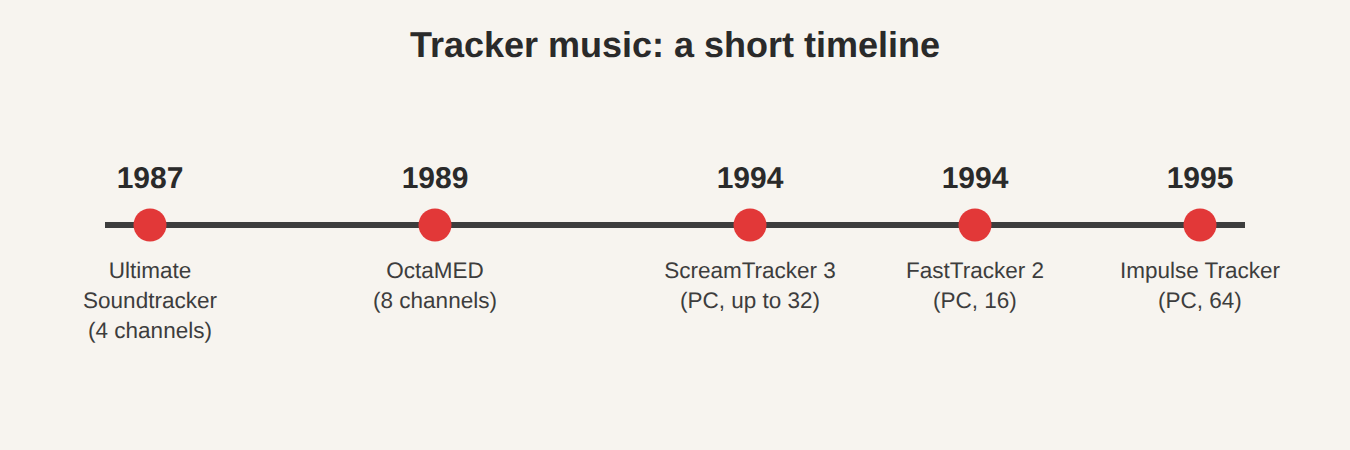
The four classic formats
| Extension | Origin | Notes |
|---|---|---|
.mod |
ProTracker on the Amiga | Four channels, 8-bit samples; the original sound of the scene. |
.s3m |
Scream Tracker 3 on PC | Up to 32 channels, improved effects and stereo handling. |
.xm |
FastTracker 2 | Instruments with envelopes, extended pattern effects. |
.it |
Impulse Tracker | Advanced features: NNA (new note actions), filters, 64 channels. |
Reading a pattern
Trackers lay out music vertically. Each column is a channel, each row a step in time. A cell might read C-4 01 40 A04: note C in octave 4, sample 01, volume 40, effect A04 (a volume slide). It looks like a spreadsheet because that is essentially what it is, and it is why tracker composers often describe their craft as closer to programming than to performance.
Why modules are still relevant
- Tiny size makes them ideal for games, demos and web projects.
- Open and inspectable. You can open a module and see exactly how a track was built, which makes it a superb learning resource.
- Active community. New modules appear every week; the format never went away.
Playing modules
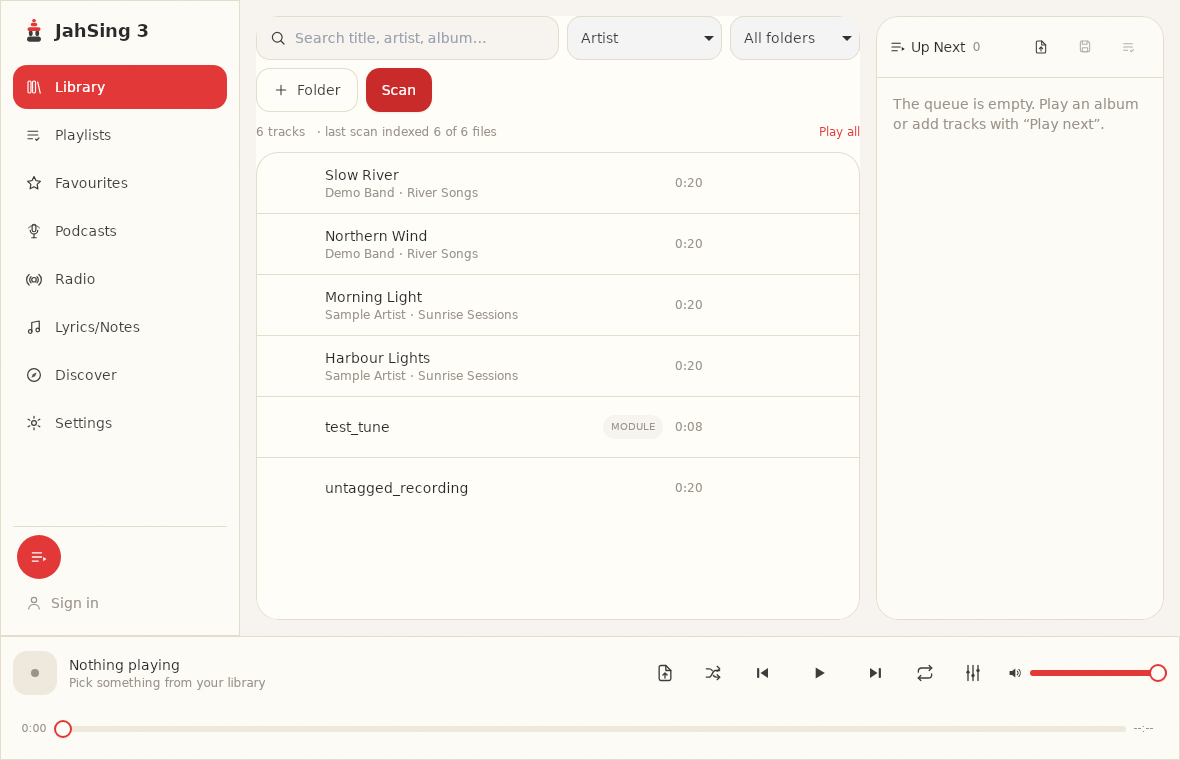
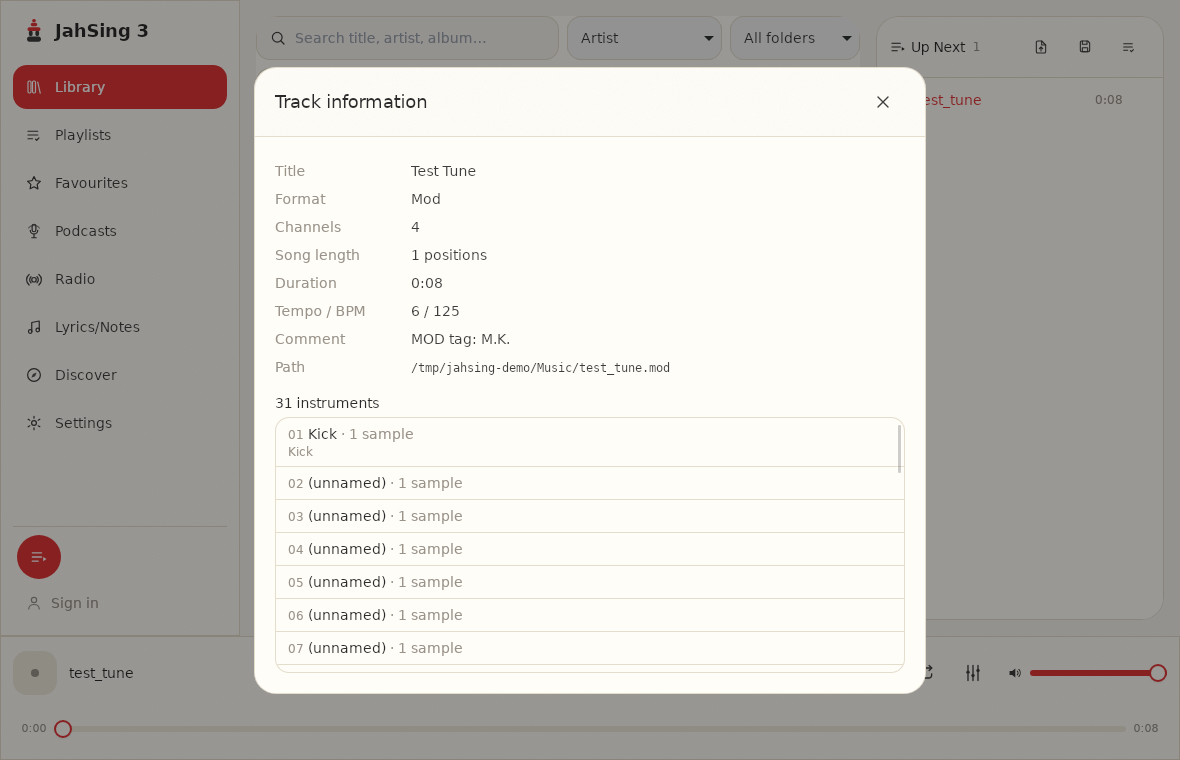
Modules need a player that can render them. JahSing 3 plays .mod, .xm, .s3m and .it files with pattern and sample information, a direct descendant of the module support in JahSing 2, so your collection of tracker files can live in the same library as your FLAC albums.
Where to find music
- Community archives of tracker music host many thousands of modules, searchable by artist, format and year.
- Demoscene party releases are usually distributed with permission to share freely.
- Always check each composer’s licence or notes: “free to download” is not always “free to reuse”.
Try writing one
Modern trackers such as OpenMPT (Windows) and Schism Tracker (cross-platform) are free. Start by loading an existing module and changing a single note. Hearing the change instantly is the fastest way to understand how it all fits together.